Behavior
A Script with Purpose
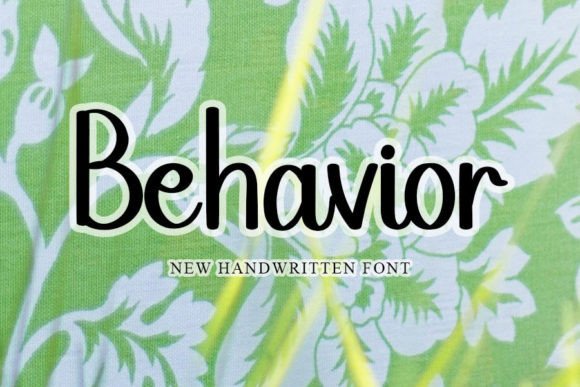
The first time I saw Behavior, I was struck by its deliberate elegance. It’s not the kind of script that feels overly ornate or decorative—it carries a quiet confidence, almost like a handwritten note from someone who knows how to write with intention. The letterforms are well-proportioned, with a balance between fluidity and structure that makes it feel both modern and timeless.
Visual Personality and Mood
Behavior has a refined, slightly formal tone that suggests professionalism without being too rigid. It’s ideal for projects that need a touch of sophistication but also maintain readability. The script flows naturally, giving it a sense of movement that can make text feel more engaging. It’s not the most playful font, but it does have a subtle charm that works well in certain contexts.
I’d describe it as a premium font that fits into the Script Amp category with ease. It’s not meant for casual use, but rather for designs where visual personality matters—like branding, editorial layouts, or packaging that needs to stand out without being overwhelming.
Real-World Application
In practice, Behavior performs admirably in a variety of design scenarios. For logo design, it adds a unique flair without overpowering the brand mark. When used on packaging design, it gives a premium feel that aligns well with high-end products. It’s also effective for social media graphics and web design, especially when paired with sans serif fonts for contrast.
One thing to note is that Behavior shines best in display font applications. It’s not the best choice for long blocks of text, but it excels in headlines, quotes, and short phrases. That said, it can be used for brand identity if the project calls for a more stylized look. Just be mindful of how it interacts with other typefaces in a font pairing.
Readability and Hierarchy
Readability is key in any design, and Behavior holds up reasonably well, especially at larger sizes. However, it’s worth testing it in black and white to ensure it maintains clarity. At smaller sizes, the serifs and ligatures can sometimes make it harder to read, so it’s important to check how it looks in different contexts.
For editorial design, Behavior can add a nice visual break when used alongside a serif font or a sans serif font. It’s less effective when used in conjunction with another script font or handwritten font, as it might create an inconsistent visual rhythm.
Design Notes and Best Practices
When working with Behavior, I recommend testing it on real mockups before finalizing your design. This helps you see how it behaves in context and whether it supports the overall message of the project. Also, pay attention to spacing and kerning—Behavior can be tricky in this regard, especially when using uppercase letters.
Another important consideration is commercial licensing. Since Behavior is a premium font, it’s crucial to confirm that you have the right to use it for client work or commercial projects. Always double-check the license terms before using it in any production-ready assets.
Where to Use with Care
Behavior is best used in situations where it can make an impact without overshadowing the content. Large headlines, short phrases, and brand marks are all excellent candidates. It’s also great for printable design, digital product creation, and Canva templates that require a touch of creativity.
However, it should be used carefully in areas where legibility is paramount. Avoid using it for long paragraphs or supporting text. Instead, reserve it for accents, quotes, or decorative elements that enhance the design without distracting from the main message.
Final Thoughts
Behavior is a versatile creative font that offers a blend of style and functionality. It’s not the most utilitarian font, but it’s definitely worth considering for projects that benefit from a refined, elegant script. Whether you’re working on brand identity, packaging design, or social media graphics, Behavior can help elevate your design with its unique visual personality.
Just remember to test it thoroughly, consider its limitations, and pair it wisely with other typefaces. With the right approach, Behavior can become a valuable asset in your design toolkit.